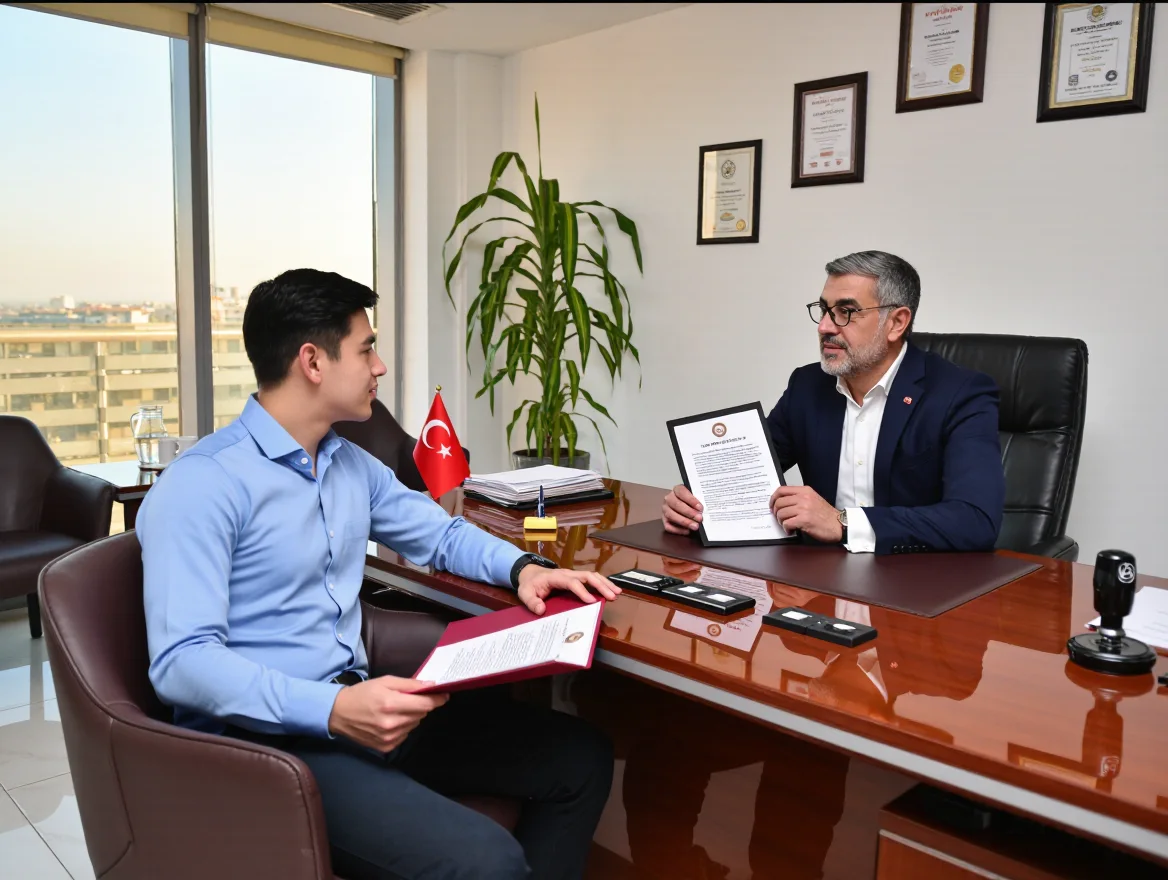
Translation and Notary Transactions for Visa and Residence Permit in Turkey
For international students in Turkey, studying, experiencing a new culture and embarking on a unique journey is very exciting. However, during this process translation and notary translation and notarization. Accurate translation and notarization of documents are the most critical elements of the visa and residence permit applications. Incorrect or missing documents can increase the risk…
For international students in Turkey, studying, experiencing a new culture and embarking on a unique journey is very exciting. However, during this process translation and notary translation and notarization. Accurate translation and notarization of documents are the most critical elements of the visa and residence permit applications. Incorrect or missing documents can increase the risk of rejection. In this blog post, we will discuss in detail how the translation and notary procedures for visa and residence permits in Turkey are carried out, the required documents and the important points to be considered during the application process.
How Much is the Notary Fee for Residence Permit?
According to the Directorate General of Migration Management, the fee for a residence permit in Turkey varies depending on the type of residence applied for and the nationality group of the applicant.
For example:
- As a general tariff, “fee fee : 1,040 TL”.
- In addition to the fee, there are also fixed fees such as the card fee. For example, it is stated as “card fee: 810 TL”.
- For nationalities exempted from the fee, only the document/card fee is paid.
Summarize: If you are applying for a standard residence permit, the fee is approximately 1,040 TL. However, the type of residence you are applying for, its duration and your nationality group are important for the exact fee.
The Translation Process for Visa and Residence Permit in Turkey
When applying for a visa or residence permit, certain documents need to be translated. These documents usually consist of official documents such as passports, identity documents, birth certificates, marriage certificates, bank statements and property documents. Apart from the visa process in each country, the documents required by foreign authorities in Turkey may vary. For example, for some countries, additional documents may be required as an obligation. For this reason, it is useful to check the required documents and translation requirements on the consulate website of your target country before applying.
The most important thing to consider when translating documents is to translate them completely and accurately. Incorrect or incomplete translations may lead to rejection of your application. For this reason, it is very important to get support from a reliable translation agency. It is also important to note that documents that go to a notary in Turkey must be submitted both in original and translated form.
What is Notary Certified Translation?
Notarized translation is the process by which documents translated by sworn translators are officially certified by a notary public. This approval indicates that the document has been translated faithfully to the original and that all the information has been translated in full and that it has legal validity. In Turkey, notarized translation is often required for visa applications and residence permit requests. This is necessary for official institutions in Turkey and abroad to accept your documents.
The accuracy and reliability of a notarized translation is one of the biggest advantages of this process. The notary takes into account whether the translator is sworn and whether the document has been translated accurately and faithfully to the original. In addition, many consulates and official institutions only accept notarized documents. All these reasons support the necessity of notarized translation.
Notarized Translation Process
The certified translation process consists of certain steps or stages. First, the documents that need to be translated must be submitted to a translation agency. This office will forward the documents to sworn translators. After translating the documents correctly, the sworn translator signs the translation and makes it ready. The translation office then stamps and signs these documents.
In the next step, the translator must take the documents to the notary in person. The notary verifies that the translator is sworn and checks that the document has been translated in accordance with the original. Once the approval process is complete, apostille procedures can be performed if international validity is required. The apostille process is necessary for your document to be valid in another country. However, keep in mind that documents cannot be apostilled without notarization. Failure to do so may result in your application being delayed or rejected.
What is an Apostille and When is it Required
Apostille is an international stamp of approval required for an official document to be valid in another country. Since Turkey is a party to the Hague Apostille Convention, it has become mandatory for notarized translations to be apostilled for many foreign applications. The apostille process is carried out by applying to the relevant district governorship after notarization. This process is an important step in ensuring the international validity of your document.
Especially for educational, business or other official applications, apostille procedures may be required. Therefore, you should consider apostille procedures when planning your document preparation process. When you need to obtain an apostille, it is enough to contact the district governor’s office after submitting your documents to the notary. If you are applying to study in Turkey, you can find official information about the details of the apostille process on the website of the Ministry of Foreign Affairs of the Republic of Turkey.
Application Tracking and Finalization
Once your documents have been translated and notarized, it is very important to follow up on your visa application. You can check the status of your application on the website of the relevant consulate or visa application center (for example, VFS Global). Usually this process is updated daily online, so it is worth checking back often. This step will help you know when your application will be finalized.
As for residence permit applications, the process is monitored through the portal of the Directorate of Migration Management. The portal allows you to track the stage of your application. Seeing which documents are missing or need more information can help speed up the process. For this reason, it is useful to log in to the portal regularly and follow the updates.
Updated Prices and Charges
The cost of translations and notary procedures for visa and residence permits varies depending on the type of document. For example, passport and identity card translations usually cost between 5-9 USD, while birth certificate and marriage certificate translations can cost between 7-12 USD. Translation of bank account statements is in a similar range, around 6-10 USD. Naturally, more comprehensive documents such as register and license documents can cost up to 10-15 USD.
The prices of notarized translations vary depending on the number of pages of the document. On average, you can expect to pay around USD 13-20 for notarization. Apostille process usually means an additional cost of 17-25 USD for documents. However, it is important to note that these prices may vary depending on the type of document, delivery time and additional services.
Be Ready to Hit the Road!
Are you ready to embark on a journey to study in Turkey? Here are your first steps! After you have prepared your documents correctly and completely, you can complete the notarization and apostille procedures and submit your application. Being careful at every stage of the process will save you time and increase the likelihood of a positive outcome of your application.
How Long Does a Notarized Translation Take?
The notarized translation process is usually completed within a few days. However, in emergencies, some translation agencies can provide fast service.
Should My Documents Be Sent Original?
Yes, for notarization, the documents must be submitted in both original and translated copies. Original documents will be verified by a notary public.
Which Documents Must Be Notarized?
In general, basic documents such as passport, ID, birth and marriage certificates must be notarized for the application.
Who Can Translate?
The notarization must be done by sworn translators in the presence of a notary public. Otherwise, notarization is not valid.
What is Apostille?
Apostille is a stamp of approval that ensures the international validity of an official document. As Turkey is a party to the Apostille Convention, it is required for many documents.