Cultural Diversity and Adaptation Processes in Turkey
Discover the cultural diversity in Turkey. Click here to learn more about social cohesion and interaction!
Cultural Diversity: The Richness of Living in Turkey
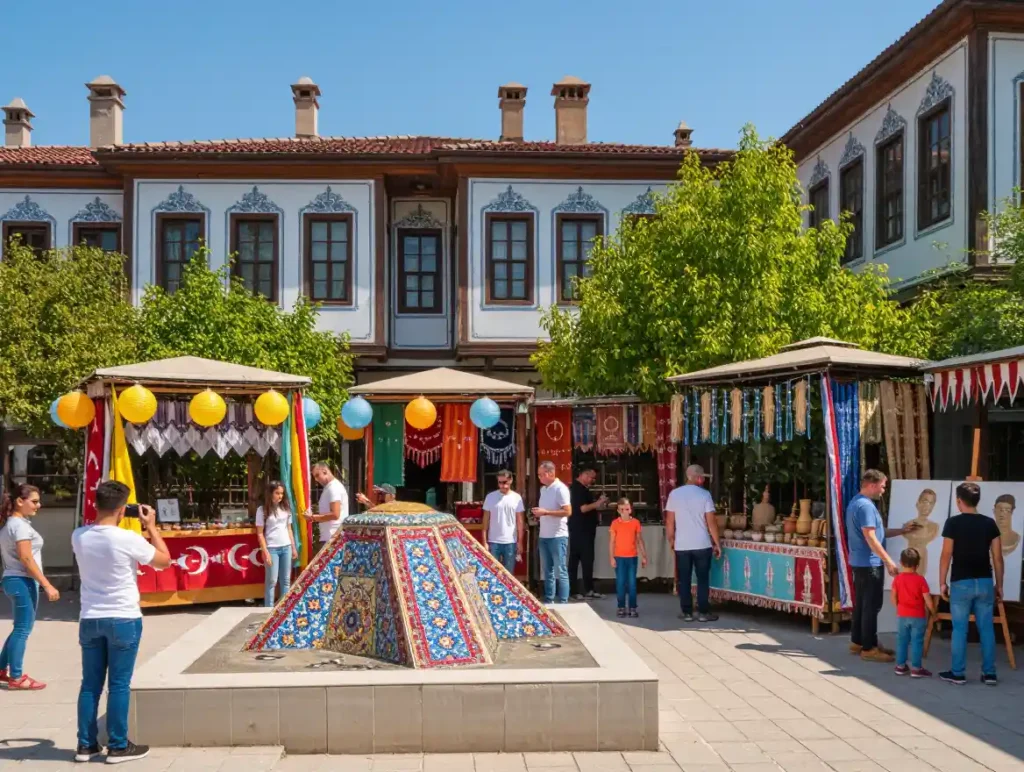
Turkey is a country full of historical and cultural richness. This land, where different cultures live together, offers a unique experience for international students. For example, festivals, concerts and exhibitions organized all over Turkey give students the opportunity to get to know different cultures.
- Carnivals and Festivals: Local festivals organized in different cities in Turkey provide international students with the opportunity for cultural interaction. For example, the Spring Festival in Istanbul brings together different music and dance cultures.
- Local Flavors: Turkey’s rich cuisine is a great opportunity for international students to try new flavors. Students can visit local markets to discover fresh fruits, vegetables and local cuisine.
The Social Adaptation Process in Turkey for International Students
Turkey offers various opportunities for international students to integrate into society. Universities support cultural adaptation processes by organizing orientation programs for international students.
Supportive Programs
- Orientation Programs: Universities organize orientation programs that introduce new students to the cultural structure of Turkey. These programs allow students to meet the local community and expand their social circle.
- Cultural Clubs: By joining cultural clubs organized by universities, students can meet people from different cultures and participate in social activities.
Advantages of Meeting Turkey’s Cultural Diversity
Meeting different cultures contributes to the personal and academic development of individuals. Turkey offers this opportunity to students thanks to its rich cultural structure.
Advantages
- Cultural Enrichment: Interacting with people from different cultures broadens students’ worldview.
- Language Development: Learning Turkish and using it in daily life improves students’ language skills. It also offers the opportunity to practice in other languages such as English.
- Networking: Making friends from different cultures helps you build an international network. This is also an important advantage for future career opportunities.
Discover Turkey’s Cultural Richness!
Turkey, with its thousands of years of history and geographical location, is a unique country that bears the traces of countless civilizations and blends cultural diversity into a rich mosaic. This diversity has made social cohesion processes both a necessity and a source of strength. Interaction between different ethnic, religious and cultural groups is progressing on a basis of mutual understanding, dialogue and respect. At the intersection of traditional values and modern life, Turkish society is building social cohesion by recognizing diversity as a richness. Intercultural contacts in education, arts, and daily life make important contributions to this process. Turkey’s experience of cultural diversity and cohesion is exemplary not only locally but also globally.
Frequently Asked Questions
What elements make up Turkey’s cultural diversity?
Turkey’s cultural diversity consists of a rich mosaic of Turkish, Kurdish, Arab, Laz, Circassian, Armenian, Greek, Armenian, Greek and other ethnic groups, as well as different religious and sectarian structures (Sunni, Alevi, Christian, Jewish).
What are the biggest challenges in cultural adaptation?
Prejudices, language barriers, socio-economic inequalities and cultural misunderstandings are the main challenges. Only through dialog and education can these barriers be overcome.
How Turkish society approaches cultural differences
Traditionally, a culture of hospitality and tolerance prevails. With urbanization and education, the process of respect and adaptation to differences is getting stronger.
What is the state doing to promote cultural cohesion?
Inclusion of cultural diversity in the education curriculum, elective courses in minority languages, festivals and projects that promote intercultural dialogue are supported.
What can be done individually for cultural adaptation?
Communicating with people from different cultures, participating in their festivals and events, developing joint projects and avoiding prejudices all contribute to the individual.